Entry 12

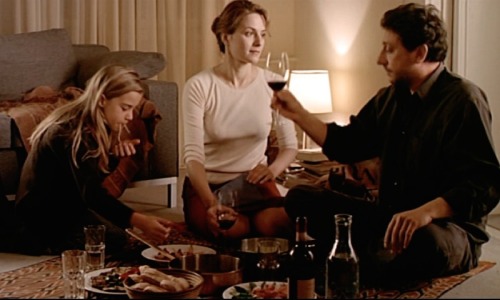
I learned a lot in this class, about film techniques, film review and most importantly, the different ways that food is used in film. One of the ways that food is used in film that I found most interesting was as a way to critique technology and human reliance on it. In science fiction films like “Soylent Green” I found it interesting how food became less about the passion of cooking, and less about enjoying it while eating and more about just feeding people. The food usually ends up losing all of its flavor, it loses all the aspects people enjoy about it, and it often becomes scarce as a way to talk about overpopulation, and the way we drain the Earth’s resources. The other thing I liked was using food as a representation of people’s emotions, especially the way in happens in “Like Water for Chocolate”. Something from that movie that I particularly enjoyed was how whatever Tita was feeling while she was making the food would later manifest in the people who consumed it. I also learned that food could portray other things like social class, or the love someone has for another.  

When watching the movies for class I favored the movies that relied more on magical realism and crazy plots because they tended to be more entertaining for me. All the movies were great but if I had to rank all the movies from least to most favorite the list would look like this:  

16. Babette’s Feast 

15. Big Night  

14. Once Upon A Time When We Were Colored  

13. What’s Cooking?  

12. Mostly Martha 

11. Soul Kitchen  

10. Tortilla Soup  

9. Eat Drink Man Woman 

8. Dinner Rush 

7. Soul Food  

6. Chocolat  

5. The 100 Foot Journey,  

4. Soylent Green, 

 3. Woman on Top 

2. Like Water for Chocolate  

My absolute favorite isn’t one of the ones we watched as a group, but the one for my group project, The God of Cookery. When I first heard the title, I thought it was going to be boring, and I didn’t research it beforehand. I was pleasantly surprised when it ended up being one of the funniest movies I have ever watched. From start to finish it was a great movie and I was never bored while watching it. All of the elements of magical realism and the physics defying characters make an already funny story even funnier. Not to mention the headlines on the newspapers that they show in the movie, not knowing what they say won’t hinder watching the movie, but I translated them, and it made some things even funnier. 

Overall, the course was not challenging for me and I gave myself enough time to watch the material and process what I had watched. I also gave myself enough time to read the articles and process those. The course was very enjoyable, and I got to see a lot of movies I would not have otherwise known about. 
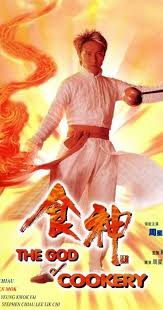
The absolute best movie, I can’t recommend it more 🙂

Entry 11

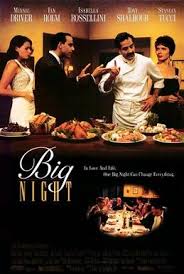
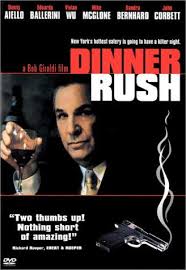
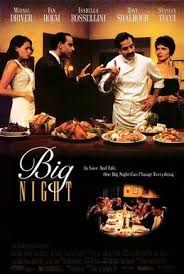
Big Night is about two brothers who are first generation immigrants from Italy trying to run a successful restaurant in America. Dinner Rush is about a successful Italian restaurant run by an Italian American man who is trying to distance himself from the Mafia and permanently quit bookmaking. 

There are a lot of similarities between Big Night and Dinner Rush. The first is that the older Italian men want the restaurants to be authentically Italian. Primo, the older brother in Big Night doesn’t want to compromise and Americanize his food for his American costumers. Primo is willing to risk the successful of the restaurant for the integrity of the food. In Dinner Rush, Louis Crop, the father of the head chef and owner of the restaurant complains that he doesn’t like the food being served because it isn’t authentic Italian food, the way his wife use to cook in the restaurant. He doesn’t eat any of his son’s cooking, instead he eats the off the menu food the sous-chef makes because they are Italian dishes. Another similarity is that the younger men are willingly to sacrifice culture for financial success. In Big Night, Segundo, the older brother is always begging his brother to relent and give the people what they want because they aren’t making any money. He even tries to make a deal with the successful Italian restaurant owner so that he and his brother could make money. In Dinner Rush, Udo, the son of Louis, doesn’t make Italian food the way his father wants him to. Udo makes lots of extravagant dishes, and when his father criticizes him, he points out that his way gets the restaurant more money. 

There are plenty of differences between the two movies as well. One difference is with the food that is being served in both if the restaurants. In Big Night, there is authentic Italian food being served at the restaurant, while in Dinner Rush there is more Americanized foods being served. The biggest difference is between the relative success of both restaurants. In Big Night, they are struggling the entire movie to make ends meet and always have a relatively empty restaurant. In Dinner Rush, it is always packed, with people making reservations, and the murders that happened are going to keep the profits coming. The restaurant in Dinner Rush is essentially the same as the successful Italian restaurant from Big Night

If I had to pick a favorite between these two movies, it would Dinner Rush, I enjoyed watching it more. The story was very entertaining, and it was cool to see how Louis handled the two gangsters in his restaurant. 

Entry 10

The film Big Night is about two brothers Primo and Segundo who came to open an Italian restaurant in America. However, they aren’t finding success because the American public doesn’t want American food, they want the Americanized version, like spaghetti with meatballs. Primo doesn’t want to give in to what the people want, while Segundo does because he wants to run a successful business. 

The brothers in the movie seem to have a strained relationship at times because they have opposing views about how to run the restaurant. They are often arguing about the way things need to be done. Primo seems to have more say than Segundo because he is the older brother, throughout the movie Segundo constantly begs Primo to just give the people what they want, but Primo always gets the final say on how the restaurant ought to be run. Although their relationship seems strange it is clear that they are still close. It is easy to see how close they are at the end of the movie when they have their fight, but the next day Segunda makes breakfast, making sure to make enough for his brother when he enters. He makes Primo’s plate when he comes in, and they wrap arms around each other’s shoulders. The end scene shows that even when they fight, they are in it together. 

As first-generation immigrants they have a lot of problems to conquer in running their restaurant. The main problem is whether or not they are going to assimilate to American culture or preserve their own culture. The pressure to assimilate from patrons of the restaurant and the rival Italian restaurant almost drives the brothers apart and almost drives Primo back to Italy where people will appreciate what Primo cooks and where he won’t have to hide his culture. 

Entry 9

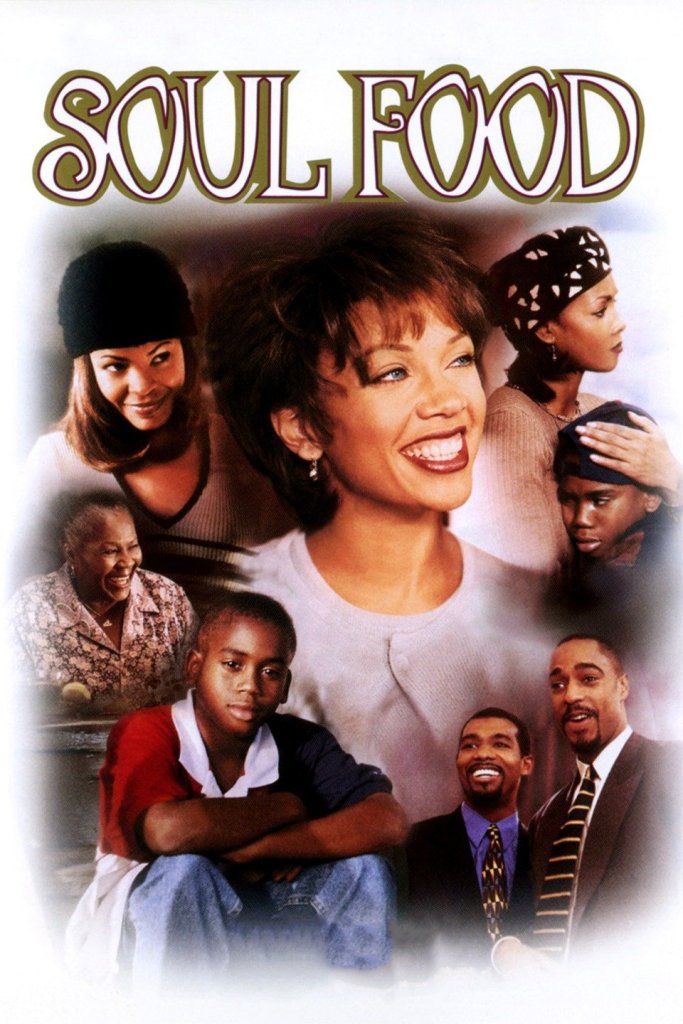
Once Upon a Time When We Were Colored is a movie set in 1946 about an boy who grows up in a small town in Mississippi being raised by several family members in his community like his Mama Pearl, his grandfather and his Aunt. The other movie, Soul Food is about a woman named Big Mama who had Sunday dinners with her family, while she falls into a coma and later dies, the rest of the family is fighting while the narrator is trying to figure out how to make the family whole again. Both movies talk about soul food, and their relation to African American culture and identity. 

The term “Soul Food” is about what some consider “authentically black food” or “food for poor blacks” and it started being used around the 1960s, so technically Once Upon A Time When We Were Colored isn’t calling it soul food but has some of the same dishes that are commonly called soul food. Once Upon A Time When We Were Colored doesn’t have many cooking scenes, but the ones that do show people coming together and showing “its pride and accomplishment in surviving such a harsh environment” (Balthorpe, 104), which part of the point of soul food, being able to come together with what little you have. The movie Soul Food is the one that is mainly about cooking and eating actual soul food. This movie shows passed down traditions such as never measuring food, just knowing how much should go in, the way black cooks would during slavery because they couldn’t read. Big Mama believes that soul food cooking is cooking from the heart and that is something embodied in both films. In Once Upon A Time When We Were Colored, we see the narrator’s aunt cooking for her son, not wanting him to leave because she’s worried he doesn’t eat good in the north. Her concern and cooking come from a place of caring for her son and wanting him to be happy. She even makes him sweet potato pie because she knows it is his favorite. In Soul Food, the cooking was a way for the family to connect, and symbolized love. When there was no food on the table in Soul Food, there was no love in the family, but when they gathered for the last Sunday dinner in the movie, the family is reconnected once again. Soul food itself it all about comfort, showing people you care, and connecting with them because in times like the 1960s that’s what connected black people together and that was a piece of culture they could have. 

Entry 8

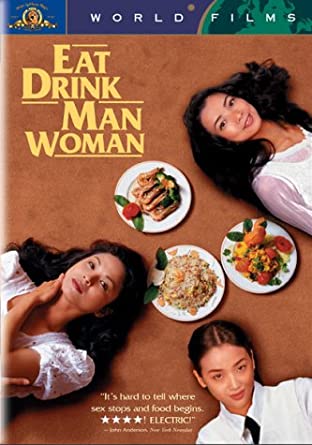
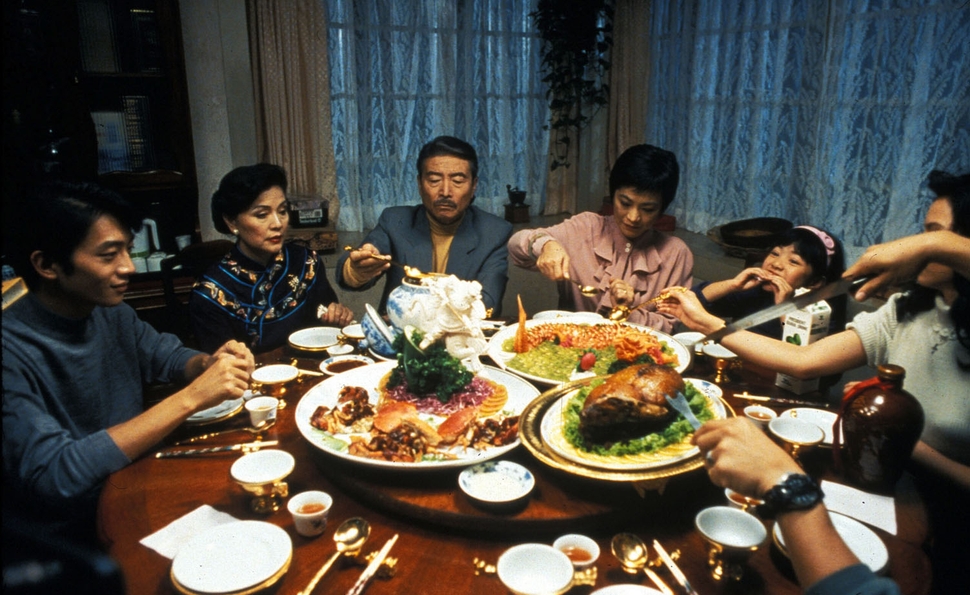
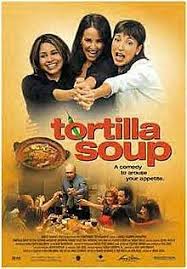
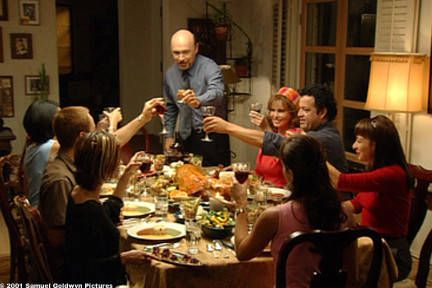
The Chinese film Eat Drink Man Woman is about a semi-retired professional chef with three adult daughters, and every Sunday he enforces a dinner so that they may all spend time together. The American remake Tortilla Soup focuses on the same family dynamics, except the family is Latino instead of Chinese.  

The opening sequences in both movies have a lot of similarities. It starts with shots of the father cooking food in preparation for the dinner and then shows daughters living their lives.  The ending also has plenty of similarities plot wise. They still have a family dinner, the young girl being pregnant, and the middle child decides not to go abroad. There are also plenty of differences in the opening and ending scenes. A difference is that in the establishing shot in Eat Drink Man Woman lets us know where we are, it is easy to see that the setting is Chinese, but in Tortilla Soup it could be anywhere and we do not know until 30 seconds into the film. A difference in the ending is that in Eat Drink Man Woman the ending seems more negative, the family doesn’t like the marriage or the pregnancy. In Tortilla Soup it is no big deal, and people are happy for them. Also, there is an extra scene in Tortilla Soup of everyone together showing that everything is fine, this is not in Eat Drink Man Woman

The characters and their motivations are very similar in both films. The youngest daughters both move in with their boyfriends, the only difference being that in Tortilla Soup she wants to drop out of college. The middle daughters both work in business but want to be chefs and decide to quit to open a restaurant, however in Eat Drink Man Woman it is less obvious that this is what she is going to do. The eldest daughters both find love and elope with a coworker. The fathers are the same as well, the only difference being that the father in Eat Drink Man Woman doesn’t want nearly as much control over his daughters as the father in Tortilla Soup, he just wants to regain the spice in his life. 

Some differences between Eat Drink Man Woman and Tortilla Soup are cultural, for example the foods they cook and how they cook them. In Eat Drink Man Woman there is a lot of steaming and frying, and the father cooks food such as tofu, peppers, rice, and Joy Luck Dragon Pheonix. In Tortilla Soup there is a lot of grilling, and the father in this movie cooks things such as cactus, bread pudding and stuffed cherry tomatoes. 

Overall, the films are very similar and most of the plot remains the same. It is just a few cultural differences and character motivations that set them apart. 

Entry 7

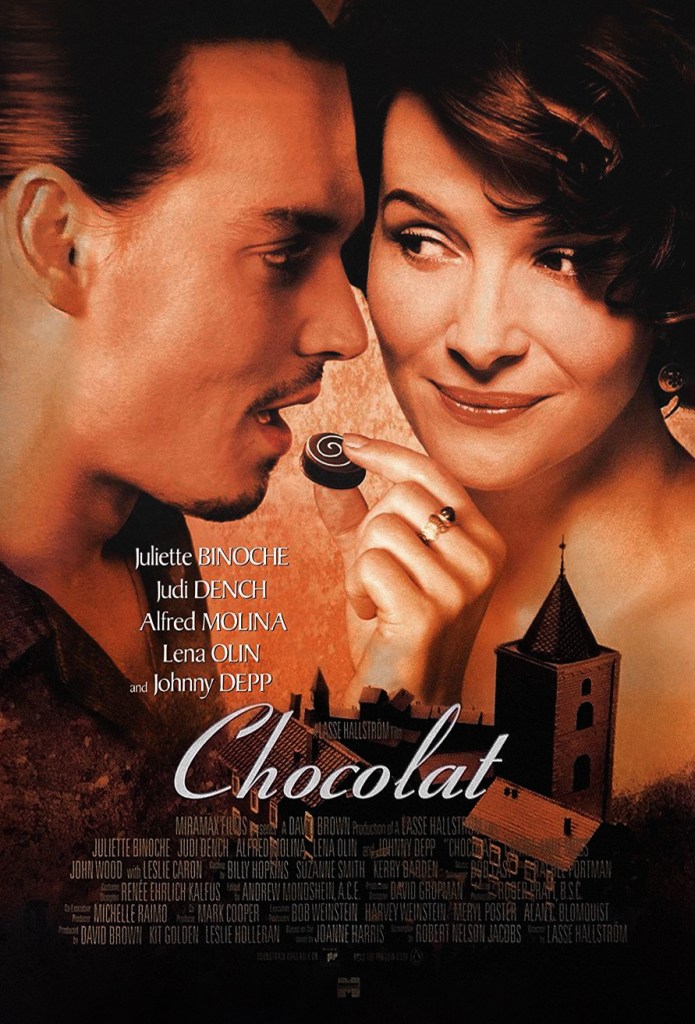
The film Chocolat is about a woman named Vianne and her daughter Anouk who are nomadic and help people along the way. The film takes place in a small village in France where Vianne and her daughter have stopped to open up a chocolate shop. They are initially met with resistance from the town but over time people come to love her chocolate and enjoy having her there. The process in which Vianne gets the small town to enjoy pleasures such as chocolate and become more open reveal a lot about chocolate’s role as a medicine in the film and even reveal a little bit of information about French culture. 

One thing I learned about French culture is that the government is supposed to be secularized. The movie shows us how the major, who has a lot of control over town, is involved in both politics and religion despite the secularization. I also learned that in Europe pharmacies are privately owned so most places only have one every few miles, and in this movie Vianne’s chocolate shop is like the town’s pharmacy. 

Chocolate plays a big role in the movie as a medicine. It is first seen as a sort of medicine when Vianne’s father, in search of natural medicine, drinks unrefined cocoa. After its introduction as a medicine, chocolate is used by Vianne to heal the citizens of the town in various ways. The first person we see getting healed by the chocolate is a lady whose husband doesn’t have much passion left in him, the chocolate makes her husband more passionate and they often come back to buy more chocolate. Another person is Josephine, who goes through the process of becoming a stronger and more independent woman, away from her abusive husband by learning how to make the chocolate with Vianne. One more person who was healed by the chocolate is the major. The major spent most of the movie trying to get rid of Vianne but at the end he indulges himself on the chocolate and then becomes a better man, even gaining the confidence to tell the woman he loves how he feels. 

Entry 6

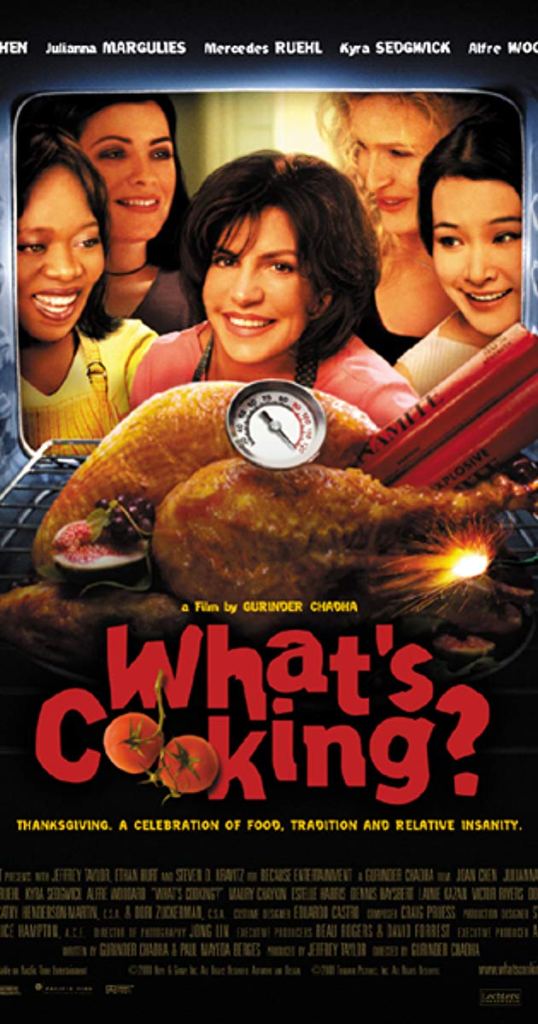
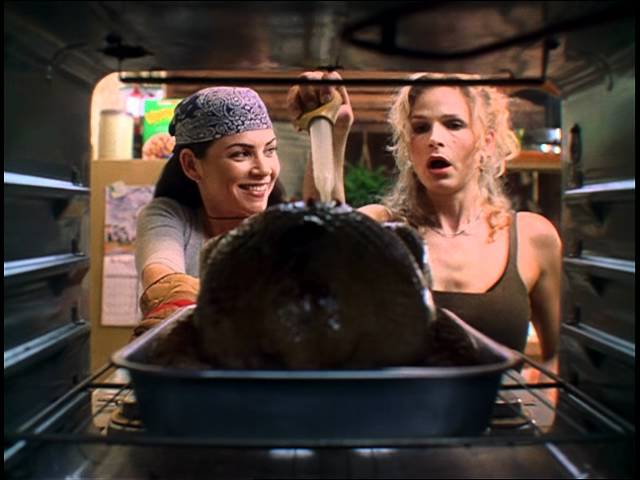
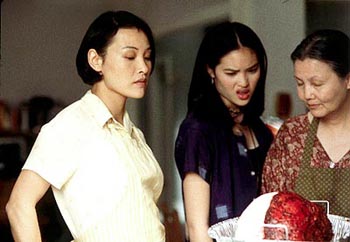
The film “What’s Cooking?” follows four families, who happen to be neighbors, from different ethnic and racial backgrounds in LA as they each prepare a thanksgiving meal. In the film, there is the Latino family (The Avila’s), the Black family (The William’s), the Asian family (The Nguyen’s), and the Jewish family (The Seelig’s). 

The film deals with tradition in two ways, there are the traditions that everyone in America follows, and then the smaller traditions typical for the different races and ethnic groups. The broader tradition is that of Thanksgiving, which all the families celebrate. There is also the broad tradition of having the women of the house prepare each meal, as seen in every family as the mothers, grandmothers, aunts and daughters gather in the kitchen to cook. Then the smaller traditions take form in different beliefs held within the family, for example the daughter of the Seelig family is meant to be completely obedient and carry the “family honor”, which is something she doesn’t do in the film. 

Multiculturalism and Ethnic identity are presented in the film through the different dinners served in each household, alongside the music that plays as we switch from house to house. Each family cooks the traditional turkey to go at the center of their thanksgiving meal before adding their own cultural foods to the feasts. For example, the Nguyen family adds spring rolls to their dinner, the Willams family adds macaroni and cheese, the Seelig family has polentas, and the Avila family adds tamales. The different foods added to the dinner alongside the traditional turkey represent their different ethnic backgrounds but also the multiculturalism there is in America. The music in the movie adds to this because there is the same song playing in the movie but as the households switch there are other types of music being added to emphasize the different ethnic backgrounds. An example of this is when the Willams family is the one being focused on, there is jazz being added to the music. Multiculturalism also represents itself through dating in the movie. In the Nguyen and Avila families, the children date outside of their race, showing a mixing of different cultures. Jimmy, the eldest son of the Nguyen family dates the daughter of the Avila family, and the daughter of the Avila family dates a white boy. 

Tradition, Multiculturalism, and Ethnic Identity are all presented through the Thanksgiving meals that have been prepared. We see tradition through the celebration and through the turkey, ethnic identity through very distant “non-traditional” thanksgiving foods, and multiculturalism through the mixing of those two things together. 

Entry 5

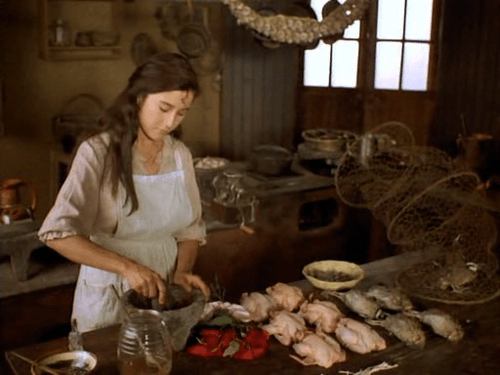
The film Como Agua para Chocolate (Like Water for Chocolate) is a frame story about a girl, Tita, who is forced to never marry or have children in order to take care of her mother, Mamá Elena. Tita uses the kitchen in the house as her safe haven and a place to express her creativity and emotion, something Mamá Elena doesn’t allow. As a result of Tita being in the kitchen for most of the time, we can see how the food in the movie is shaped by cultural influences, and how the food shapes the characters’ personalities in the movie. 

Looking at the main character, Tita, the food that she cooks consistently reveals how she is a passionate and emotional person. Throughout the movie we see her pouring her emotions into what she cooks, and this often manifests in the people around her feeling what she feels as they eat her food. The first example of this is when she makes a cake for her sister’s (Rosaura) wedding, she is crying into the cake batter because her sister is marrying her true love. The same sadness, heartache, and sickness sweeps over the attendees of the wedding. First, we see them start to cry, then we see Mamá Elena longing her true love, and it ends in the rest of the wedding guests becoming sick. Another notable scene is when Tita starts to use cooking to send a message to Pedro, her true love. The passion that Tita puts into making quail in rose petal sauce is also manifested in everyone else eating, namely her sister Gertrudis who runs off naked with a man after eating the food. 

The food in this movie shows a blending of two different cultures, Native and European, as that is what Mexican culture is, an amalgamation of the two different cultures together. This is seen as Tita consistently takes cooking advice from the Native servant Nacha, blending that in with European recipes. Also, when Tita cooks recipes that require different ingredients when made in Europe, she improvises when she cooks to make something entirely new or different. 

The food in the movie also reveals the nature of other characters in the movie, such as Mamá Elena and Tita’s sister Rosaura. When it comes to Mamá Elena we can see how controlling she is, and how dispassionate of a person she is. She sees cooking as a chore, not an enjoyable activity, and she finds something wrong with everything Tita cooks throughout the movie, finding things too spicy or not spicy enough. When she is seen cooking with Tita we can get a proper idea of how cruel she truly is. Mamá Elena gets upset at Tita for crying over the death of her nephew, even hitting her while they are making the food together. Rosaura, unlike her sister, doesn’t have a passion for cooking, making everyone sick when she tried for the first time. Showing how uncaring she is in comparison to her younger sister. Rosaura can’t digest food at all, and this reveals how she is cruel just like her mother and cannot handle the truth of the situation she put herself in, that Pedro and Tita still have feelings for each other.  

Overall, the food reveals a lot about the culture and characters. Showing the audience a blending of cultures, Native and European. Also showing us who the different characters are through their relationship with food and cooking. 

Entry 4

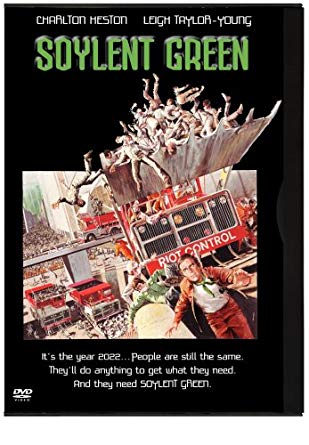
The modernist film Soylent Green is about how society has become overcrowded and the people barely have any resources to survive, most don’t have a home, electricity, or running water, and because of food shortages, the poor must eat the chemically processed “soylent”.  However, the rich get portions of real food that they purchase from food stores called “food inventories”. The twist of the movie is that the Soylent Green being sold to the masses is actually made from dead people. Most of the population is unknowingly cannibalistic as they can’t afford to eat real food. In this film the deeper meaning of food is to show how striving towards modernity isn’t necessarily a good thing because it can be at the cost of the planet, and the people. Food has always been a way to express ourselves, and the loss of food in Soylent Green shows how the people have loss themselves in a race towards modernity. This is best said in Laurel Foster’s Futuristic Foodways she says Soylent Green “serves as a warning against the negative outcomes of the mass production of modernity, to a point where overconsumption has led to self-consumption”. This overconsumption to self-consumption can be seen as the beginning of the movie starts with a montage of technology thriving and then cutting to a futuristic New York that has depleted so many of the Earth’s resources there is no longer anything for people to eat but other people.  

If I were in a situation such as the one in Soylent Green, I would most likely be like some of the working people who are shown in the film because I am not rich and if the world were to devolve into a dystopia right now, it is likely I would only get poorer. On the other hand, I am a woman and I could be “furniture” like many of the women who live in the apartments with rich men and eat real food. Thinking optimistically however, if I were in the exact situation as the main character, I would have delivered concrete evidence of what I’ve seen. I would gather things like the records stolen from the apartment or a recording if possible, to show the people. If revealing the truth didn’t work, I’d follow in the footsteps of Sol and end it. 

yummy!

Entry 3

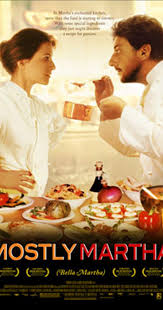
In Mostly Martha, the main character is a particularly uptight woman who is stuck in her ways. Food is everything for Martha, her job, her life, and the ideal way to express herself. In this film food plays a big role in revealing character traits, motivations, and feelings. Food is constantly used to reflect Martha’s mindset and opinions. When it comes to Martha, food and the recipes for food are her way to control things in her life, only ever adhering to a recipe. Martha is the type of person who wants simple solutions to problems in life much like how recipes provide easy steps to making complex meals. She even says that she wishes she had a recipe for Lina because she has no idea how to take care of her. She also wants everything to be orderly in her life, as shown by how she conducts her kitchen and makes food in an assembly line process, and how she makes very professional meals even for herself at home. 

Love for Martha comes in the form of her being able to cook for others, mostly because she doesn’t have another way to connect with people. After her sister dies and she must care for her niece, Lina, Martha tells her that she will cook for her. This is Martha’s way of telling Lina that she cares and will try her best in but so many words. 

When it comes to Lina, someone who is half German and half Italian, food is meant to be her connection to her other half. Lina herself is also the bridge between German and Italy, serving as a metaphor for getting Martha and Mario closer, and soon romantically involved. Mario, and his food is meant to bring more love into everyone’s life. This is seen as he is the catalyst that makes Lina start eating and get closer to her aunt by coming to work with her. Mario also forces Martha to start eating with her coworkers instead and reading silently, which ends up making her less lonely. Mario also insists on serving food for Martha and Lina “family style” which makes everyone closer instead of eating at a table and not interacting at all. 

Food is also the thing that brings romance into the movie. Mario and Martha spending time together in the restaurant kitchen caring for Lina is what made their romantic spark. Mario cooking for Lina and Martha, meant that Mario and Martha were spending more time with each other for their romantic relationship to blossom even more. Finally, Mario coming over and having Martha taste his food brought them together completely. 

Overall, love and romance are represented through cooking and food in this film. Food helping to bring people closer together and allow characters to express their feelings for one another. 

Design a site like this with WordPress.com
Get started