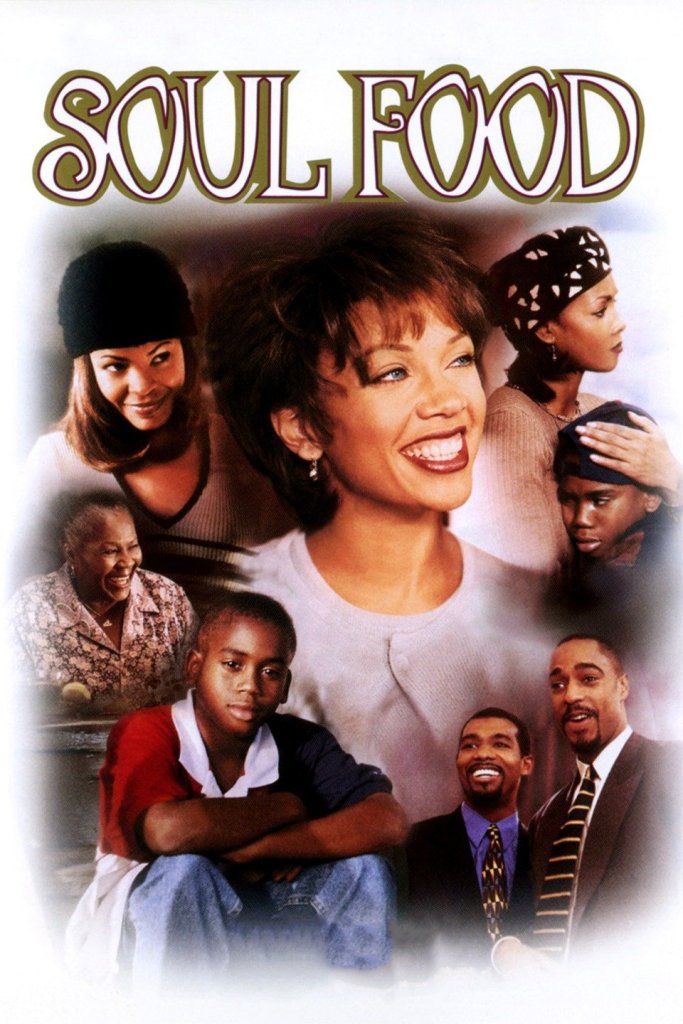
Once Upon a Time When We Were Colored is a movie set in 1946 about an boy who grows up in a small town in Mississippi being raised by several family members in his community like his Mama Pearl, his grandfather and his Aunt. The other movie, Soul Food is about a woman named Big Mama who had Sunday dinners with her family, while she falls into a coma and later dies, the rest of the family is fighting while the narrator is trying to figure out how to make the family whole again. Both movies talk about soul food, and their relation to African American culture and identity.
The term “Soul Food” is about what some consider “authentically black food” or “food for poor blacks” and it started being used around the 1960s, so technically Once Upon A Time When We Were Colored isn’t calling it soul food but has some of the same dishes that are commonly called soul food. Once Upon A Time When We Were Colored doesn’t have many cooking scenes, but the ones that do show people coming together and showing “its pride and accomplishment in surviving such a harsh environment” (Balthorpe, 104), which part of the point of soul food, being able to come together with what little you have. The movie Soul Food is the one that is mainly about cooking and eating actual soul food. This movie shows passed down traditions such as never measuring food, just knowing how much should go in, the way black cooks would during slavery because they couldn’t read. Big Mama believes that soul food cooking is cooking from the heart and that is something embodied in both films. In Once Upon A Time When We Were Colored, we see the narrator’s aunt cooking for her son, not wanting him to leave because she’s worried he doesn’t eat good in the north. Her concern and cooking come from a place of caring for her son and wanting him to be happy. She even makes him sweet potato pie because she knows it is his favorite. In Soul Food, the cooking was a way for the family to connect, and symbolized love. When there was no food on the table in Soul Food, there was no love in the family, but when they gathered for the last Sunday dinner in the movie, the family is reconnected once again. Soul food itself it all about comfort, showing people you care, and connecting with them because in times like the 1960s that’s what connected black people together and that was a piece of culture they could have.

 Reel Food and World Cinema Blog